

On 26 January in Belgrade, the Regional Centre for Environmental Law (RCEL) organised a presentation of the analysis “Representative Action as a Mechanism for Environmental Justice”, prepared within the project Greening of Justice, implemented by YUCOM and the Association of Public Prosecutors of Serbia, with the support of Sida.
The event brought together representatives of the judiciary, the legal profession, civil society organisations, academia, and the interested public, with the aim of opening an expert discussion on the existing limitations of civil-law environmental protection in Serbia and exploring possible directions for improving the legislative framework.
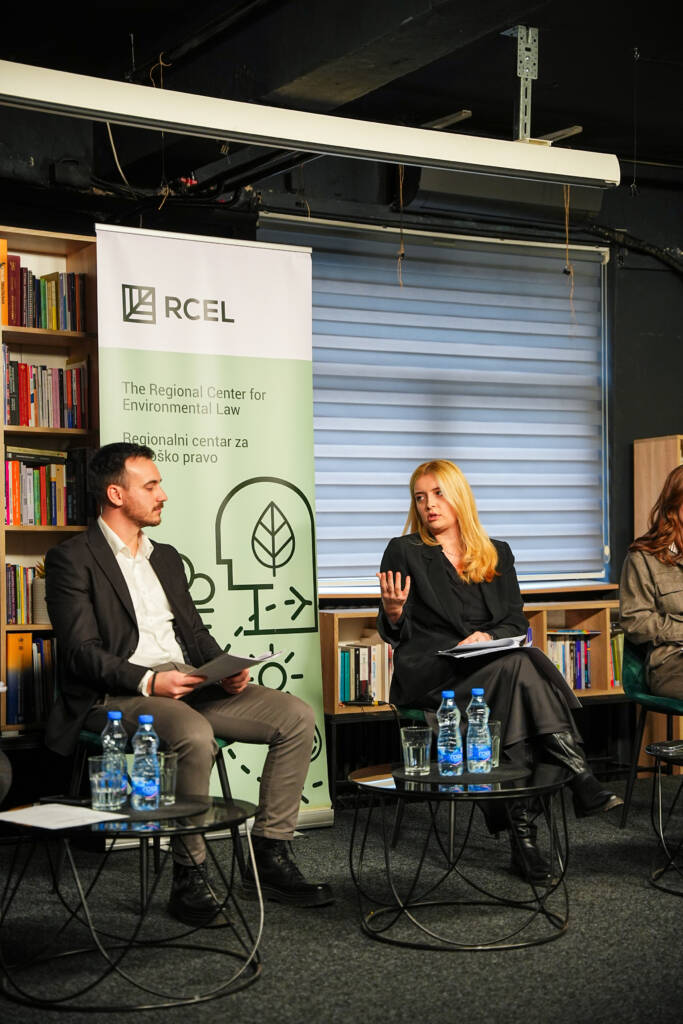
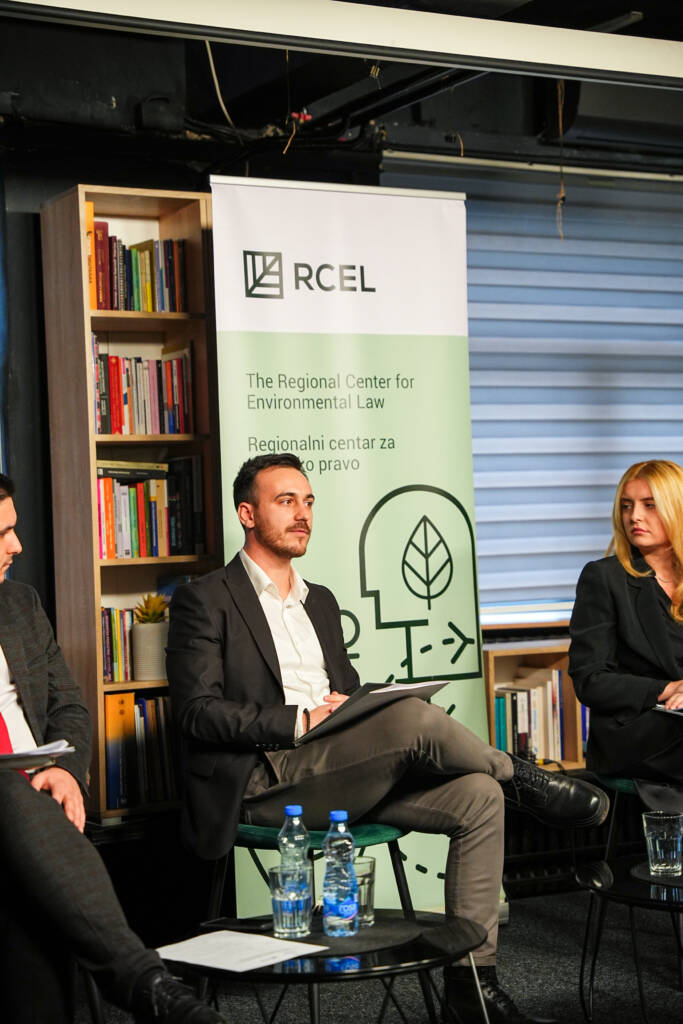
The analysis was presented by co-authors Danica Janković and Radmila Đurđević, together with environmental lawyer Predrag Džamić, while the panel discussion was moderated by Danilo Radičević, an environmental law specialist. The first thematic block focused on the existing legal framework and its application in practice. Particular attention was drawn to the limited scope of Article 156 of the Serbian Law on Obligations, which formally provides for preventive protection against environmental damage but is applied rarely and inconsistently in cases concerning collective and diffuse interests.
The results of the empirical research were also presented, pointing to the lack of a consolidated and publicly accessible body of case law in environmental disputes, high and unpredictable procedural costs, complex and expensive evidentiary proceedings, and the absence of institutional and financial support for public interest litigation. As highlighted during the discussion, these factors significantly discourage citizens and organisations from initiating court proceedings aimed at environmental protection.
The second thematic block was devoted to comparative legal solutions, with a particular focus on the European Union, Croatia, and the Group Litigation Order mechanism from the United Kingdom. The advantages of different models were emphasised in terms of procedural efficiency and cost reduction, alongside their respective limitations.
The conclusions of the analysis underline that the introduction of a specific representative action would represent a key step toward advancing environmental justice in Serbia. Such a mechanism would enable more effective judicial responses to violations of the public interest, ease the burden on courts, and ensure that court decisions have broader and longer-term social effects in the field of environmental protection.
The event concluded with an open discussion, during which participants assessed the analysis as a significant contribution to understanding the existing system and a strong basis for further dialogue on the necessary normative reforms in the field of environmental justice.
The analysis is available at the following link.






Photos are available here.